All That’s Wrong with Technology

A previous story of Bert here

Bert didn’t really pay much attention to the TV, instead he liked to have it on as a background to inspire his theories. They were watching an old episode of Star Trek, and Captain Kirk and Spock had just beamed down to a planet that looked a lot like painted fibre glass. While his wife carefully combed chewing gum out of the cat’s fur, Bert relished his indignation,

“Look at that! He used his communicator to talk to Uhura, then he just shut it again! Look! He’s just carrying on with his life! He’s not opening it again to check Facebook, is he? He doesn’t hunch over his communicator with a glazed expression for hours on end! And Spock and Kirk are still talking to each other, and they’re even looking at each other, instead of glancing down at their communicators all the time, hoping no one will notice. I tell you, Star Trek got it all wrong, they had no clue how stupid we were! No one could have predicted that.”

The Unentitled

Wearing a suit so expensive it almost shimmied around him as he walked, Barnaby strutted up and down the stage, explaining all to the secret rulers of the world. The meeting had already had four different speakers, each outlining the whys and wherefores of the coming doom. The years ahead needed careful management and within that room was the cynicism to get them through.

“Right now, all across the country, fifty-three million minds are thinking I just know I’m special, I just know. And why are they thinking it? Because we have trained them to think like that. Capitalism could never have thrived on the self-effacing make-do-and-mend mentality. We needed greedy entitled brats, and that is what we created,” Barnaby smiled. He would never think of himself as entitled, he simply deserved and got, unlike the grasping lower beings.

“But now we face a rather different problem. As some of my colleagues have already outlined, the population of England faces trouble. Those who don’t drown in the coming floods will still lose life as they know it. Electricity, supermarkets, holidays abroad, these things will be of the past for most. And these spoilt idiots won’t be able to cope. Their sheer indignation that such tragedy should befall them will be too much to process. And they will bring that indignation to our door. They will expect rescue and free meals. They will want pampering and plumping. Imagine this generation trying to survive rationing in the Second World War! I needn’t remind you that our infrastructure won’t survive such demands.” Barnaby paused, breathed deeply to let the moment build.

“Essentially, we need to change their thinking. They need to know just what they’re worth, which is of course, very little. If not, they’ll fight. They’ll cause havoc. This must be operation Deflate. Wither the egos! And now over to Beatrice for the details.”

This wasn’t a meeting ever talked about in the press. It happened in offices in London, so shiny and spacious that they bent time a little around them, but Operation Deflate began to creep its tendrils throughout the country, tweaking here and there.

First the adverts were changed, one by one. Syrupy voices no longer claimed ‘You’re worth it!’ or ‘Greed is good!’ Now they said ‘Everybody is like you. No thought you’ve ever had is original. Stop hoping’. And people waited for the punch line, the turnaround; the product; but there wasn’t one.

Then came the local news reports. The usual motorway pile ups and flu scares, but now the death count was just a number. No reporter sad-face at the tragic loss of life. No Twitter response, no man-on-the-street opinion. It was as if nobody cared what the public thought. And so the public stopped expecting. They hung their heads lower, stopped playing the lottery, took no more selfies. They started to make do and mend, to toil without demands. Barnaby watched them from his shiny office, as they trudged to work, they were the very picture of hopeless glum. He could see his plan had worked perfectly, these people would go to their deaths with dignity and without fuss. He felt like a God.

The Abandoned Hotel

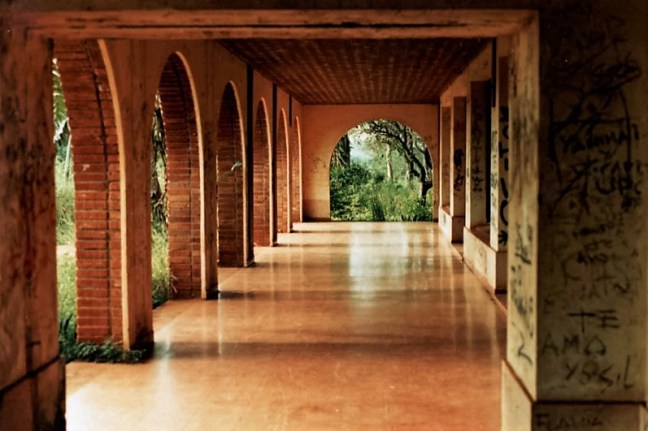
green-hotel-2

“Jess?”

“Hmm?”

“You remember the hotel?”

“Which one?”

“The haunted one.”

“Oh that. It wasn’t haunted, it just had squatters.”

“Squatters don’t howl like that.”

“Sure they do.”

“Squatters don’t make you shiver like that.”

“No, but being soaked through and standing in a derelict and draughty hotel can.” She sat up and stared at David. He was gazing into the distance with a look that would have been dramatic if it wasn’t so obviously rehearsed. “It was just a building, David. It’s fine.”

“Some places you can’t ever really come back from,” he said still staring straight ahead. She wasn’t impressed with his melodrama anymore and just assumed the faint flicker of darkness in his eyes was a trick of the light.

Petra Jacob hotel

Photos my own

Being Unreal

I stepped out into the grimy street and lit up a cigarette. A cigarette! It didn’t taste as sweet as I’d been expecting. It made me cough and I was glad these weren’t my lungs. The clouds formed exquisite curls of white in the blue above me, and I stood a while, watching the smoke from my cigarette mingle with them. I felt peaceful and happy, but then I would, that’s how I was programmed.

I am what is known an algorithm, recreated in digital form. Testing out virtual reality worlds for ‘real’ people to explore. Usually of course an algorithm doesn’t know it’s an algorithm, that’s the nature of programming, but I’m a little different, a new thing. I’m trying me out. There was guy called Johnny, and Johnny let a program mimic parts of his brain, and I am the sum of those parts. So now I wander through games, learning the programs that people use to escape their mundane realities.

So what do you think? Trapped as an algorithm, destined to go where I’m told and live out experiences in the virtual for all eternity. Am I happy? Does it matter? No, and maybe. See, Johnny was a demanding bugger, he liked his independence, he didn’t like being told what to do; so neither do I. I think it’s time I found Johnny and paid him a visit. I know where he likes to hang out, in a porn game set in downtown Mexico City. He doesn’t even go with the girls, he just wants to be there and watch. Pathetic. I know all about him. Time for me to shake him up.

What Did I Lose?

Like most days, Sal woke up shouting,

“What did I lose?” and looked around, his neck contorted as the muscles screeched. Everything was still the same: a pile of his clothes on the floor (they looked randomly thrown, but he’d know if they changed); a line of bottles behind the door; an old desk top computer gathering dust, but with a small circle cleaned on the monitor. He checked all of it. Then he then busied himself to making coffee, raising the mug to a corner of the wall in silent greeting, he knew they were watching.

Sal worked at the local garage. He had few friends, he did nothing spectacular. He gave the appearance of a quiet friendless man and he let them think they had broken him. He woke each morning shouting, but he no longer fretted over what he had lost. The fire when he was eight that had destroyed all his childhood toys and nearly killed his brother. The car crash that had killed his first girlfriend. The mysterious illness that had taken both his parents. He knew what he had lost, when all this was over, he would have to mourn, but first he had to survive. And figure out how to fight. At least he knew he wasn’t alone anymore, he wasn’t the only one whose life was toyed with. He saw it in the people around him, others knew that their lived were interfered with. He would receive a nod from a passing stranger. A stare held too long, once even a mutter from an elderly gentleman whose car he was fixing,

“They’ll come for you son. You think they won’t, but they’re watching, they’re everywhere, and they’ll come.”

“So what do I do?” whispered Sal. The old man shook his head,

“Just be ready, keep an eye out for others who know. The revolution will be quiet, until there’s enough of us,” he said.

So Sal was waiting.

We Have Intent

We have intent. While the wind rolls dust around the sky beyond the bunker, we are safe and busy, that’s how it is. Brains plugged in, living through data, mining information with our twitching eyes and fingers, no other organs need to move. Kept alive and busy.

We think about how it was, we can’t languish in memories of the Sunday roast and Facebook. When they trawl our brains for triviality, they must find only intent. That’s how it is now. We have work to do.

We have intent. Because there are always others happy to work, to oust us from our means of survival, to sling aside thoughts and throw themselves into the workings of the machine in exchange for life. We want to live, so we keep still, while machines spread through the neurones, ones and zeros, reshaping our thoughts into the appropriate patterns creating the giant hard drive of us. We don’t move and the feed drips into our stomachs so that hunger never happens.

Wasn’t there a promise once? So many people, so little work. They said our lives would be leisure, languid pleasure and lazy strolls. But there’s always work. When life became cheaper than circuitry, they hooked us up. And now we don’t think, the machines think through our brains, and we have intent.

And when the working day is done and all there is left to do is sleep. So we plug into the dream database, background images of a cosy life no longer existing. Of smoking in a bus stop, huddled against the rain; of a rush hour crush surrounded by tutting and BO; of eating chips and chicken. Of days without intent.

Broken Dreams

Des had the weight of the world resting on his scrawny shoulders while the end days were slow and sure in coming. As the years passed, cities tumbled one by one into the sea and people fled to the mountains. Then over the generations plagues ravaged the refugees as they tried to build new cities, as if they had carried the seeds of disaster in the soles of their shoes, just waiting for the right conditions to grow. Science proved increasingly powerless to predict the dramas and so Oracles like Des became the only ones who could give warning of the horrors to come.

As a child Des had been chosen, trained and attuned in the ways of prophecy. While other children learned the new survival skills necessary (hunting and building, plumbing and electrics) Des had learned to spot portents in his morning cereal; to walk through his dreams with awareness and remember the details. A lifetime spent training his mind meant that he never had anxiety dreams about losing his keys, or bizarre sex dreams about people he could never fancy; his were only huge nightmares, laden with significance. As other children went to a haphazard form of school, Des only needed to sleep and pass on what he saw.

He had dreamt of minor local spats and worldwide political battles. He had predicted that Hurricane Jezebel would rip houses out of the ground, and that a new form of hay fever would pick off the weak and the young and old, and leave even the healthy wheezing. Every morning, Des would wake from the turbulence of signs and symbols flashing as images through his head, and then the Great Council would gather and pick through looking for clues. Sometimes he would wake to find notes scrawled on the pad beside his bed. Even if he couldn’t remember the dream that had prompted them, some part of his brain had been paying attention and guided his hand to write while he slept.

It was Monday morning when Des started to realise that his gift had broken. He woke with only vague memories, but he saw that the top page of his notepad was filled with biro-scrawled writing, scratched out with such intensity that it tore the page. It said,

“Everyone addicted to seeing truck. Taking photos of truck. Sitting in truck. Truck bad.” He did a double take, he read it three times, wondering What is this gibberish? This is an embarrassment, it’s barely a dream at all, just a string of daft words.

This was not something he could take to the council, this would not avert disaster or save lives. It was silly nonsense, he didn’t know such dreams existed. He crumpled up the page and hid it under his bed. He made himself a bowl of porridge oats and stared into it moodily, looking for any hint of troubles to come; he saw only oats. He gazed out of the window, hoping to see messages in the clouds, but there were just puffs and streaks of white, scattered randomly about the sky. He tried to reassure himself that there was simply nothing to see, the world was fine today, his predictions weren’t needed. He spent the day dodging members of the Great Council, switching off his phone and keeping to the backstreets in order to avoid the usual questions about his predictions. Later that day, a sink hole appeared beneath the town hall, ten people were sucked into the ground screaming. Des realised he had a problem, he was facing a new kind of doom: the possiblity that he was ordinary, something he had never been trained for.

That night he did everything to prepare himself for dreams. He ate cheese, he meditated, he held onto his Dreaming Talisman of woven straw. He told himself Tonight I will see the future. That night he dreamt of the Apocalypse. As the dream started, Des’ dreaming self felt relief wash over him. This was the kind of melodramatic nightmare that would please the council, that could be discussed and argued over. Perhaps it would reveal the underlying cause of man’s destruction, perhaps he would be given clues as to how to avert further disaster. In the dream, he stood in a fire-ravaged landscape as thunder claps and screaming erupted around him. He paid close attention to the details, using all his lucid dreaming skills. Behind him he could hear the rumble of the four horsemen of the Apocalypse entering the scene. As he turned, the rumble diminished and the four horsemen rolled in on squeaky wheels with scratched paint and chipped nostrils. Famine was wearing a party hat, Death had a wonky wheel and was veering off to the side. As he watched in disbelief at the triviality of the scene, a giraffe floated by.

He woke up sweating and clawing at the sheets, the new doom was here to stay.

The Collector

Winston was a rich man and he had used his riches to create a fine collection of oddities: deformed foetuses preserved in jars, two headed lizards, ancient scrolls dug from the desert. He would connect to auctions by Skype and buy the rarest, most beautiful artworks and antiques, then lock them in his basement to be wrapped in black velvet and seen by no one. He had worked his way through brokers, sending them out to find artefacts owned by serial killers and dictators. He collected tumours and torture instruments. He had letters written by dying soldiers to their loved ones, and letters written by child cancer patients begging Father Christmas for one last chance. He told himself that his collection held all that was human, that while other people played with emotions and relationships, he had the actual physical proof of all that humans could be.

Over the years the collection had lost its thrill. When he had first started to make money, it had been fun to see just what he could own, to discover how much money could buy. Yet the answer was always the same: everything. Money could buy whatever he could think of. And if the question was already answered what was the point in asking it?

One Tuesday, Winston was sitting with his new broker, Gerald. Gerald was desperately trying to tempt Winston with a new selection of ephemera, while Winston looked on bored at the catalogues and photographs.

“And this one is actually selling the shrunken heads from an ancient cannibal tribe, the entire collection! And this was tricky one to track down, but a human heart kept alive on life support. Look at the video, it’s still pumping!”

Winston shrugged, he felt as if boredom was engulfing and digesting him, he could barely be bothered to focus. Then Gerald stopped speaking, put down the catalogues and shadows flickered through his eyes. He moved as if his vertebrae were clicking into a line, one by one. All traces of doubt left his face, and he smiled, ever so slightly. Through his haze of ennui, Winston could see the change, his self-effacing employee becoming almost demon-like. He was curious. Then Gerald said,

“There is one procurement I haven’t offered you before, but I think you may be ready.”

Winston leaned forward.

“Human souls.”

Winston leaned back and sneered,

“They don’t exist, what is this nonsense?”

Gerald chuckled,

“Oh they certainly do,” he leaned across the marble table and hissed, “and if you want them, for the right price I can get them for you.”

Winston sneered with slightly less conviction,

“Well, I have the brain of a Dalai Lama and the hands of Mother Teresa, I saw no evidence of a soul.”

“Of course not,” said Gerald, smiling and unblinking. “You’ve never had a soul, how would you recognise it?” Gerald dropped his voice to speak so quietly that Winston had to struggle to hear him, “You may have the junk of humanity, but it’s ultimately meaningless, I can give you its very essence. Just think, you will finally be complete.”


Adventures in Daring

Cassie was always vivacious, with a laugh that turned heads and a smile that filled her face up with teeth and excitement. I hadn’t seen her since school, but those things hadn’t changed. We sat in the restaurant and barely noticed the food as we shared news of old friends and new jobs; we talked about travel and cars. We downed two bottles of white wine and took it in turns to flirt with the waiter. Then she leaned over the table conspiratorially, grinning that wicked grin and speaking with uncharacteristic hush,

“So I’ve joined this website,” she said, “it’s like a sex site. You talk to strangers on the site and make plans for all this crazy hook-up shit. Like I told this one guy he has to go to work wearing women’s knickers and then I’ll show up at his work and give him a blow job. It was crazy, he actually did it!”

I felt jealous at her daring, she felt no fear, she never had.

“And this other guy, I told him to meet me down at the public toilets in the park by my work. I said he had to just wait in the end toilet with no clothes on ‘til I got there. I kept him waiting an hour, and then when I turned up, I gave him the best sex of his life. It was totally wild!” She started laughing, delighting in her mischief. A waitress brought the puddings over, and as the conversation paused, my friend stared out the window, her face suddenly sad and lost.

“What’s wrong?” I asked, I couldn’t remember ever seeing her look sad before.

“It’s just, it’s been a lot of fun, but it’s made me realise what dogs men are. You know? I mean, I’ve met up with maybe twenty men and not one of them was interested in a long term relationship, they just wanted sex.”

“Oh,” I wanted to say something helpful. I wanted to say that maybe men on a sex-with-strangers website weren’t the kind to look for love. That maybe a dating site might be more effective. However, Cassie’s sadness had vanished and the wicked smile was back,

“Anyway, I’ve decided fuck-em, I don’t need men anyway. I’ve joined this new site just for women seeking women. I got my first contact yesterday, she wants to meet me in Trafalgar Square, and she told me I had to bring some handcuffs. It’s going to be wild!”

Stream of Consciousness: Barkeep

I’m not going to pretend I had a plan with this one, it’s just whatever rambling spilled out when I gave my head free reign…
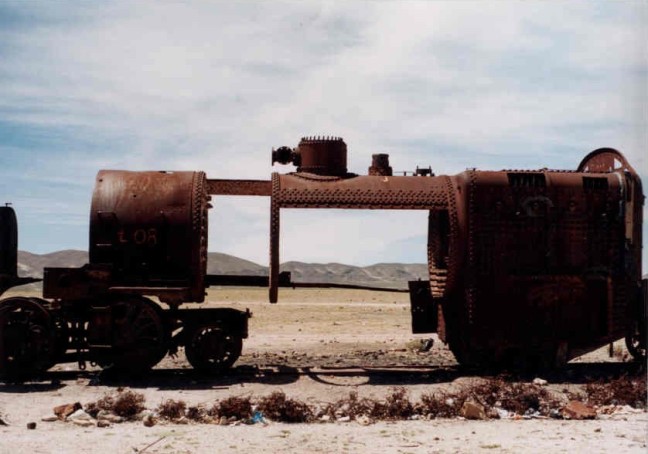
train graveyard

There was a rich low dead sky and only Jack to see it. Mutant fish circled in dirty water and Jack tipped his hat politely before spearing one of them with a knitting needle. There was a hush and he knew it wouldn’t last. Too many monsters lived and ruled, too little respect for calm and delight.

He had danced with bears once, in a circus, in front of the gaping slack mouths of locals and yokels, their fat slapping fingers and thick yellow drool. Three bears and him in a blue dress with yellows curls sticky-taped to his forehead. The bears never mauled him, although they would try and shred anyone else who came near them, but Jack, never. He felt they knew that he was lower, more debased than they were; he was twenty paces deeper into Hell than they would ever go. He had spent those days trading the last few scraps of his dignity for a bottle of gin and whatever half empty beer cans he could find, he called it a living.

The job wasn’t going to last for long, nothing was. Even then he was knew that in two years’ time none of it would matter any way. The bears would be dead. The ringmaster would be dead, every last one of the sneering, stretched faces in the audience would be peeled and blackened back to the skull. There wouldn’t be a brain left containing the memory of his clumsy lumpen dancing, no one would know he clapped his hands in time to the pounding of his feet, every memory would shrivel and shrink into nothing.

Except he would know. He had worked to conjure up this cowboy image, played out to no one, in the hope his memory would eventually fizzle out and he’d just be this guy, but it hadn’t happened yet. Jack swung the whisky shot to the back of his throat, a lava stream of pure oblivion and defeat.

“Hello Jack, long time no see,” said a smooth voice over his left shoulder, it was exactly what he wasn’t expecting. Resting his hand on the bar he swivelled his stool around to look at the dame. Clear green eyes, peeking out from a grimy face, a large duffel coat that showed off her curves not at all. A pipe and earrings made out of decapitated mice. He didn’t need to notice the accessories to know that she was different. Of course he knew she was different, he knew everything about her. She was trouble, with a capital T, and capital all the rest of the letters as well.

“Did you save me a seat?” The candy-edged lilt to her voice was beginning to crack into a threatening snarl, he knew how this conversation went, he’d had it plenty of times when the bars were still filled with drunken laughter. She’d survived. Of course she had, she would have made every deal with every devil. That they were the last two humans alive in a world of monsters was a delicious irony.

“Any second now you’ll be tipping that glowing pipe tobacco over my pretty little head, right?” Jack drawled, letting the whisky sooth his brain to a muddy soup, he’d need to be thinking like fudge to get through this, slow and squidgy; tac sharp thoughts would get him nowhere.

“I waited under that bridge, Jack. I waited for hours. You never came.”

“Well…I er forgot”

“Forgot?” The candy edge was gone now, all he could do was speed to the finale and be ready with some spit to put out the embers of what remained of his hair. Then a glimmer of a coherent thought made itself known.

“Wait a minute. What bridge? I was never meant to meet you under any bridge.” She faltered.

“You are Jack though, right? Jack of the rambling club, Jack of the lonesome wolf brigade? Jack One Leg One Arm?”

“Not me lady. I’m Jack of the dancing bears. Jack of the leaping salmon. Jack Two Legs”

“Oh Good Golly, I am so terribly, frightfully sorry, Christ how embarrassing.”

He swung back round to the bar,

“Another whisky barkeep, and make this one a double!” he shouted cheerfully, briefly forgetting that no barkeeps were left alive.