A Life Caught in Rain

“Listen out for the rain, I don’t want the washing getting wet,” she says.

“Sure mum, don’t worry; just keep watching the film. Look, this is your favourite bit, isn’t it?” my mum’s eyes flick back to the TV, where Richard Gere is lifting Debra Winger into his arms and for a moment her face lights up, the old glint of joy in her eyes. While she’s distracted I get up to tidy away a few plates, pull back the curtains, check that she hasn’t unplugged the fridge.

“Listen out for rain,” she says, her face fretful again, disturbed by my movement.

“It’s alright mum, there are clear blue skies, look,” I point out the window where the sky is more of drab grey than blue, but she only glances vaguely, then sinks her thoughts back to the TV.

I turn my back to pick up a few cushions that have fallen on the floor, dust them off, plump them up so that it will feel more like home. I want her to feel safe here, that the room fits around her and she’s where she’s meant to be.

“Listen out for rain, I don’t want the washing to get wet,” she says. It’s what she’s been saying for years, latching onto the thought that makes sense, something to remember in a murky sea of confusion.

I don’t tell her there’s no washing out. I like that she has a focus, a small tie to this world, keeping my mum tethered with this thin thread of worry. I want her to feel safe in this room, but I’m scared I might lose her to it altogether.

Coulda Shoulda Woulda

“They told me I wouldn’t regret if I followed their rules,” whispered my uncle; his body was shrivelled and hunched, but his eyes were burning with indignation. “They said, these are the things people regret on their death beds, and they listed them. As if you could sum up all human experience in a list. As if we’re all the same.”

“I know Uncle Andy,” I said, gingerly patting his hand, scared to break the fragile skin. But I didn’t understand, I had no idea what the problem was. Uncle Andy had had a great life. He had six kids and a loving wife. At thirty-seven he’d abandoned his lucrative accountancy business to go off-grid. He took his family to Italy to live on the beach, he had spent ten years selling his paintings to tourists. Most people would do anything to live Uncle Andy’s life, even Andy himself had liked it at the time. However, now he was nearing the end, as cancer claimed one cell after the other and chemo scrunched him up like a piece of paper, Andy was talking as if his life had been a waste.

“You know what they said? In their lists and articles? They said people regret not spending more time with their family, not pursuing creativity, people regret working too much. That’s why I did it, why I moved to the Amalfi coast, out of the rat-race, painting and playing with the kids.”

“Yes. And that was good, wasn’t it Uncle? That was a good time?”

“No! Ten years painting the same beach scene over and over again, to tourists with no imagination!” His rage was giving him strength as he stretched forward in the chair. Numb blue nails dug into the chair arms, wisps of hair clung to his forehead with sweat. “Nobody wanted my picture of the apocalyptic desert, or the dragon dressed as Biggles. And don’t let anyone tell you that growing your own vegetables is better than buying them in a supermarket, the number of hours I spent digging the ground for potatoes, if only I could have those hours back now. I’d use them right, if I could do it all again.” I knew this was one of stages of death. My mum, ever the pragmatist, had told me he might go through this, the emotional stages: anger, resentment.

“What would you do instead?” I asked. He had the twitch of smile, it affected his ears more than his mouth.

“Video games. They looked like fun. Who wants to pick caterpillars off cabbages when you can race cars through a war zone.”
“But time you spent with your family, that was good, wasn’t it? That was worth it?” Uncle Andy sighed as the fight drained from him, and he shrivelled a little more.

“I’m not saying it was bad, but there are seven billion people in the world and I spent it most of it with seven of them. I just keep thinking, what if there was someone better?”

No matter how my mum had prepared me, I left Uncle Andy with my heart dragging. I didn’t understand how someone with a life so well lived could feel such sorrow. Are we all doomed to lie on our death bed agonising about all the things we could have done, no matter what we did? I slouched out of the hospital, feeling the shrivelling of my own body, suddenly even my dreams weren’t enough. What if I did make that round the world boat trip? What if I did marry Jessica from Maths? I would still regret.

I was in the wood and half the way home before I worked it out. I was kicking my way through the leaves, at first in a moody manner, then with increasing glee. At one point a dog had abandoned his owner to join me and leapt around barking with delight. And I got it.  Because if you’re going to regret whatever you do, then there’s no point in planning for it. Uncle Andy was sad now, but when he was living his life, he had loved it. So you can’t live life for your death bed, you can’t live trying to defy the Death Bed Regret List. Screw it, you just have to live for whatever joy you can get.

Footsteps

I got inspired by another mindlovemiserysmenagerie prompt.

The image and first line given were:

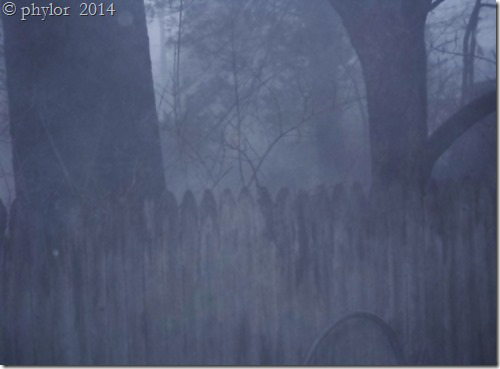
Footsteps echoed eerily in the fog.

fog

And here’s my flash:

Footsteps echoed eerily in the fog, and she kept an exact pace so that her soft padding through the wood could not be heard. For three nights now she had followed the steps, but never caught up with the spectre that made them. She could see the footprints as they pressed into the ground and vanished, she could see the breath of the ghost as it mingled with the mist like curls of smoke, but she never saw its face. Footsteps echoed eerily in the fog, and she followed, tonight would be the night she reached out and touched death. She couldn’t wait.

Facebook Blues

Sarah was content before she joined Facebook.

She had been popular at school. She had glided through the corridors with her good looks and quick wit. She saw it as her duty to enlighten the lesser beings (the nerds, the weirdos, the ugly) of their place in the world, beneath her. She had been so successful at growing up, that it never occurred to her to move out from her home town and seek further approval; she simply was great, so why try? She’d always assumed that those nerds, weirdos and uglies would still be impressed.

Then she joined Facebook, and discovered those same hapless beings were running companies or living in far off lands. One was even a model. She had been happy imagining how sad and sorry they all were, but instead she could see their photos of glamour and adventure, and excited posts of achievement and popularity. And she had nothing to post. She went to work at the hairdressers, she went home and watched X Factor, she went to the supermarket.

“I think you’re either good at being a child or good at being an adult,” posted one ex-dweeb, all her pimples gone. The accompanying selfie showed her drinking cocktails in an exclusive club in London. “And now I’m a surgeon in Harley Street, it makes all the  bullying worthwhile. But it seems like all the cool kids are now just stuck in the same town in crappy jobs, pretty sad really.” The post got two hundred likes and thirty comments agreeing. Sarah was incensed.

So she set out to prove them all wrong. She spent two days plotting and shopping. She travelled to London and scoured the streets. She sweet talked every good-looking stranger. She wore her credit card down to a stub. And then she unleashed the new Sarah onto Facebook. Careful not to show all the evidence of her sparkly new life all at once, just a few details at a time.

Monday: The picture on Sarah’s Facebook page showed a pair of men’s shoes by the door “Oops, looks like I did it again #YOLO”. She had bought the shoes in Shoezone, they were accepting returns.

Tuesday: picture showed a Ferrari with the number plate SRH 2. “Guess who’s got a new car!” She had wandered around Chelsea for three hours looking for a car to pose with. She had to balance just above the bonnet so as not to set off the alarm.

Wednesday: picture showed Sarah grinning in a selfie with a barman, “Time for a little drinkie.” The little drinkie cost a day’s wages. She had tried to get a few of the other patrons to join her for a photo, but they had backed away from her.

Thursday: picture showed Sarah with a horse, nose to nose, “My own Ferdinand, looking gorgeous as always.” She hadn’t been able to get on the horse, and it had taken many attempts before Dobson (the horse was not called Ferdinand) allowed her near him.

Friday: ten pictures, all showing her new haircut from a different angle. The haircut was real.

Her newly added friends liked and commented, with gushing praise for her glamourous lifestyle. Sarah felt such a high, riding on the crest of praise, she didn’t even think about how she might maintain proof of her glamourous existence. Every time she logged on (thirteen times in one hour) there was someone else giving her the validation she craved, that she deserved; even if the reason they were giving it was not the reason she deserved it.

“Oh you have a horse! He’s beautiful!”

“Love the hair, honey.”

“Yolo! LOL!”

Saturday morning, she opened up Facebook with glee, and with eyes still blurry from sleep. She clicked on a PM and felt her stomach drop as dread took over. Her one true nemesis was on Facebook, the worst gossip she knew. The only one that could unravel her web of lies.

“Sarah! Wonderful that you’re on Facebook finally, but what’s all this about a horse? And men’s shoes? I’ll call you later, love mum.”

Writing Challenge

I always read the ideas on Mindlovemisery’s Menagerie but never get round to doing them in time, so today I’ve pulled my finger out so I can play the game (I think those metaphors together may be dubious, but I’ll keep on).

This is for prompt 2

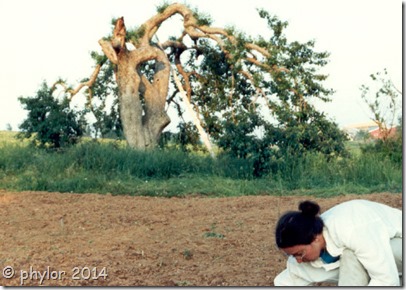
In 25 words or less, write a story (beginning, middle, and end) about what’s happening in this photograph.

make-that-garden-grow_thumb

So my brief story:

The tree reminded her of her mother, a dramatic and looming presence, and she always worked harder beneath its stern gaze.

Link to Saturday flash splash 07.01.17


That’s My Face!

“But you don’t understand, they’re using my face!” I shrieked down the phone. The ever soothing voice on the other end crooned,

“That must be very distressing for you sir. Perhaps you could clarify.”

And that’s when I realise I’m speaking to a program, a program written to placate and calm irate callers, but not to fix anything. I angrily put my phone in my pocket (I want to slam it down, but its expensive) and look again at the advert on the Tube station wall: A sunny beach, a happy couple on a sun lounger, and a spotty geeky twat leering in the background. And that twat is me. It’s not the first time this has happened either. I’ve appeared in adverts for toothpaste, shoes; this one is for an alcopop. And I’m always the goofy fool, the comic foil. Maybe if I was portrayed as the sexy one I wouldn’t complain, but still it is my face, it should belong to me alone.

So how did it happen? Well, let me tell you a few secrets. Adverts don’t use real people anymore. They haven’t done for some time, you see real people are expensive and computer programs can do the same job as effectively, more cheaply and without all the fuss of going on location. But the faces that computers create are an amalgam of features, generic representations of personality, age, gender. That’s why they all look more or less the same, even people of different races conform to a generic appearance – you’ll see Chinese people, but not too Chinese. African, but African with just enough Caucasian blended in. They play with the different possible components of face and body and come up with some whole new being. Supposedly.

But it seems like whoever wrote the algorithm is as lazy as the rest of us and instead of inventing properly new faces, they just repeat the same generic stereotypes. And one of those stereotypes is me. And how do you think that feels? To know that I am the spotty generic sad-case?

It makes me feel angry. Not like the kind of angry when you get tricked into watching a ten minute video that promises to tell you Five Foods that are Making YOU Fat, but doesn’t; the anger goes deeper than that. It makes me feel slighted and the rage gets right into my blood. It makes me want to fight back. Because they never expect the spotty sad-case to fight back. They think fighting back is for the generic, tough, good looking ones. They think that people like me haven’t the gumption, they think that I am going to behave within the confines of their stereotype. Well, gumption is borne of rage, and now all I need is a plan.

The Supernice

Joelly was supernice. Everybody said so, Joelly made certain of it. With her blonde curls, big eyes and squeaky voice, who could ever call her anything but nice? She sat in the college canteen, twirling her hair around her finger and sharing her understanding of the world as seen through the eyes of nice.

“You know what? There should be a place for nice people. A village. Keep all the nasties out,” she declared to her classmates. Her shyness always vanished when she didn’t need it. “And we’ll keep that Andrew out, he doesn’t deserve to be with nice people.”

“Andrew’s ok, isn’t he?” Tim spoke up as all the faces swivelled his way with accusing eyes: was he questioning Joelly? and Joelly spat back,

“He’s a horrid little boy. You know he asked me out? Me! As if I’d want to look at his spotty face for a moment longer than I have to.”

“That doesn’t make him horrid. Misguided maybe,” tried Tim, a little desperately . “I mean, people ask each other out, right? That’s what people do.”

Joelly pulled back a little as if he had struck her, then she tipped her head to one side, opened her eyes wide and adopted an expression like a kitten abandoned in the rain. Tears started to well up. Nobody ever disagreed with her, and the shock felt almost violent. Quickly the others started to cluck and soothe her as she choked out the words through her tears,

“And you’re a horrid little boy too!” she gasped, and ran from the room, leaving Tim to the judgement of his peers. He glanced around in panic, suddenly knowing what kind of Hell Joelly’s village of niceness would be.

“You made her cry!” they hissed, and Tim knew he didn’t stand a chance.

The Continuing Wisdom of Bert

smiley-dog

Bert could barely suppress a smile as he groaned his way into his armchair. A good groan was like a fine wine, something to be savoured; plus it served as a segue into a new conversation. While his wife tried to watch Doctor Who, he explained the thought that had occurred to him on the toilet,

“I’ll tell you what’s odd; dogs never used to smile when I was young, but you see them now and they’ve all got big grins! All over the Internet.  Tom posted a picture of one on Facebook, a big doggy grin it had. That’s genetic engineering that is. That’s modification. Centuries of inbreeding. Isn’t it? Isn’t it, Becky?”

“Uh huh.”

“But what I’ve been thinking is, when are they going to work on cats? I mean dogs were always happy creatures and we had the wagging tail and licking, so there’s no real mystery about how they’re feeling, but what about cats? No one ever knows how a cat is feeling. They could do with smiles. When they going to modify cats to smile? Becky? Becky?”

Becky didn’t answer, and Bert sat back, contented. They could carry this on later, over dinner.


Picture pinched from here

The Polite Girl

These walls shall run red with your blood and echo with your screams. Not as revenge, but as a smoothing of fate, a coercion with destiny. Your horror will finally satiate me, your end will be my beginning.

Clare shyly raised her hand and Mrs Devonshire turned instantly towards her,

“Yes, Clare?”

“Is the answer Slovenia, miss?” asked Clare.

“Yes, excellent work,” Mrs Devonshire smiled with a tip of her head, wanting Clare to feel warmth radiating out from her. Clare looked down at her hands.

Of course it is excellent, cretin. I can toss you meaningless facts while your future is sealed.

Mrs Devonshire turned back to the board and started speaking, but was interrupted by the bell. Twenty-seven identically dressed children filed towards the door, Clare moving with them, trying to lose herself in the flow. Mrs Devonshire stepped forwards, blocking her; she spoke discreetly,

“Now, Clare, you know you have your meeting with the therapist now?” Clare responded with a duck of her head and an embarrassed shrug. It was lies, she wasn’t embarrassed, but it was what they wanted.

“I know you don’t like it, but it’s important for someone who’s been through…well, what you’ve been through.” Mrs Devonshire’s voice was dripping with pity and Clare smiled a wan, long suffering smile, before quickly escaping out of the door.

You know nothing of what I have been through, how dare you presume! With mediocrity stunting your growth, you cannot conceive of my experiences. You believe because you have stolen my life, that you can define it? Idiot!

Clare’s therapist was called Tom, he spoke slowly, with a tone that rose and fell with the regularity of a ticking clock.

“Now, I think that last time we met we were making some real progress talking about the abuse you suffered…”

Clare had quickly zoned out. She had no difficulty keeping an interested look on her face, while her thoughts swooped and danced. Her face was mild, but her thoughts boomed.

You would call the creation of a God, abuse? You would rather grovel in your mentally healthy cage, so clean and empty of glory? That was not abuse, it was a release from the bone cage.

Clare wasn’t allowed contact with her parents, they were considered a toxic presence, but it didn’t matter, they had taught her what she needed to know. They had given her strength and knowledge that dwarfed anything these scurrying ants had ever known. So she attended the therapy sessions, she sat through school, she kept her expression neat. She kept the raging vengeful God inside, all her power and fury waiting, just like she had been taught.

“You’re probably experiencing many emotions that are difficult to process: guilt, anger, feelings of abandonment…”

Clare did not feel abandoned. Her parents had set her free. They had made the ultimate sacrifice, having trained her, empowered her, they had thrown themselves into the jaws of the system, so that she might escape.

But like all good parents, they would never leave her on her own without giving her instructions on how to survive, how to evolve, and how to smash her way through the world leaving bloody, wailing destruction in her wake. It just wasn’t her time quite yet. She folded one hand in the other and looked dreamily out of the window, while the therapist droned on. This fool would be the first to die, she would make sure of it.